Help Kids with AMPS Thrive: Early Diagnosis Changes Everything. Spread Awareness Today!
Amplified Musculoskeletal Pain Syndrome (AMPS) is a chronic pain condition most commonly seen in children and teens (especially pre-teen girls), where the nervous system amplifies normal sensations into intense, often debilitating pain—without any ongoing injury, inflammation, or tissue damage.
The pain can be localized or diffused, intermittent or constant, and may include extreme sensitivity to touch, where even light contact feels excruciating. Other common symptoms include fatigue, sleep issues, headaches, abdominal pain, and sometimes skin changes like swelling, temperature differences, or color shifts.
Early recognition is crucial! —many kids suffer prolonged misdiagnosis (often dismissed as "growing pains" or psychological), leading to missed school, activities, and emotional distress. Prompt referral to a pediatric rheumatologist can dramatically shorten diagnosis time and help restore normal function through intensive physical/occupational therapy, exercise, and psychological support (not medications as primary treatment).
AMPS AWARENESS ALLIANCE
AMPS Awareness Alliance Mission
The AMPS Awareness Alliance’s mission is to increase awareness among children, parents, and healthcare professionals and to help support efforts in reducing the time to diagnosis and finding a cure for AMPS.
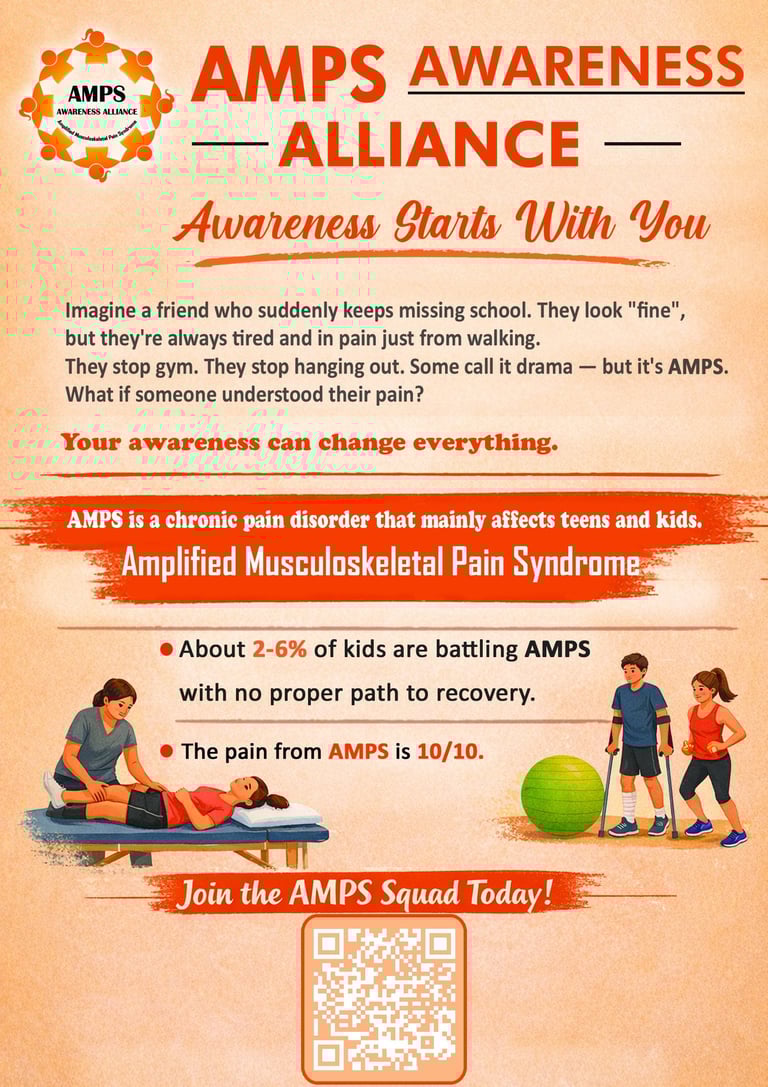

Join the AMPS Squad today!
Would you like to help spread awareness on AMPS? Or Would like to share your experience with AMPS? Or Would like to reach out to us for more information?
info@ampsawareness.org
Support
Join us in raising awareness for AMPS.
Resources
SUBSCRIBE
info@ampsawareness.org
© 2025. All rights reserved.